x
  • No hay productos en la lista

Search

Categories

Noise Barriers

Railway Equipment

Urban Equipment

Road Equipment

ADIF Electrical Substations

Forestry Equipment

Metal Noise Barriers

Add

Metal Noise Barriers

Add

Metal Noise Barriers

Add

Metal Noise Barriers

Add

Metal Noise Barriers

Add

Metal Noise Barriers

Add

Metal Noise Barriers

Add

Metal Noise Barriers

Add

Metal Noise Barriers

Add

Metal Noise Barriers

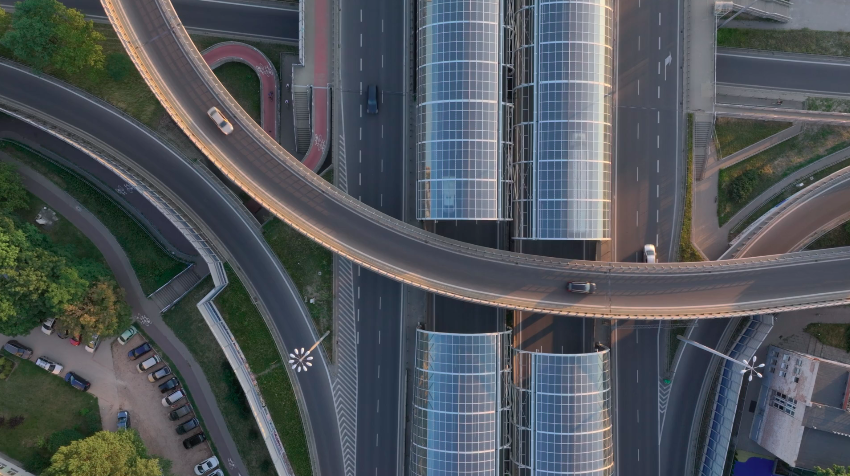
First, noise barriers are essential structures for noise control. For example, they are used in roads, industrial areas, and urban areas. Furthermore, their modular design allows them to adapt to different environments. However, their effectiveness depends on factors such as material and height. Therefore, it is crucial to analyze their characteristics. In short, these screens combine functionality and durability.

Materials and structure

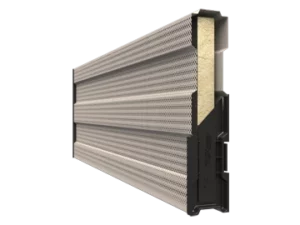
On the one hand, galvanized steel is the most commonly used material. It is also complemented by sound absorbers. On the other hand, the structure includes sturdy panels and posts. This ensures a long service life. However, aluminum options are also available. Therefore, the choice depends on the project. Finally, installation is quick and safe.

Sustainability and life cycle

As part of their commitment to the environment, these screens are made with recyclable 100% materials, contributing to the circular economy. Furthermore, by incorporating recycled materials into their production, they significantly reduce their environmental footprint. However, to maximize sustainability, it is essential to properly manage the product's end-of-life through specialized channels. In fact, for more information on applicable environmental regulations, you can consult the official MITECO portal.

Adaptability and aesthetics

In addition to their acoustic functions, metal screens stand out for their visual versatility. First, they can be customized with a variety of colors and finishes, making them easy to blend into urban or natural environments. Furthermore, they allow for decorative elements, such as perforated patterns, which enhance their appeal. Thus, they are an ideal solution for projects that require both functionality and aesthetics. At the same time, the strength of the metal ensures that they retain their appearance and performance for years. In short, they are an investment that is as long-lasting as it is sustainable.

Installation and maintenance

First, installation must follow technical specifications to ensure effectiveness. However, if performed incorrectly, performance could be compromised. Therefore, it is crucial to have specialized professionals. Furthermore, regular maintenance improves the lifespan of the screens. Therefore, we recommend periodic inspection to ensure proper operation. Finally, maintaining the screens in good condition guarantees optimal noise reduction for years.

Long-term economic impact and efficiency

In fact, metal acoustic screens represent an excellent investment. Therefore, they help reduce the costs associated with less durable solutions. However, the greatest advantage is the positive impact on quality of life, as they reduce noise in urban and industrial areas. Thus, they not only improve public health but also boost productivity. Finally, their sustainability makes them a responsible choice, as they are made from recyclable materials.

Urban and landscape integration

In the current context, metal acoustic screens have evolved to become active elements of the urban landscape. Unlike traditional solutions, they not only serve a technical function but also contribute to defining the visual identity of spaces. For example, in urban renewal projects, they act as canvases for local artists or as supports for vertical vegetation.

On the one hand, their modular design allows them to adapt to both historic and avant-garde settings. On the other hand, the combination with other materials (wood, composites) creates aesthetic contrasts that enrich the urban fabric. It's worth noting that some administrations now consider them not merely barriers, but cultural infrastructures.

Finally, this multifunctionality positions them beyond their acoustic role: they are urban regeneration tools that engage with heritage and innovation.

Types of foundation

Foundation by isolated footings

To begin with, this system stands out primarily for its constructive simplicity. It consists of individual bases that support each post independently. It is generally used when the soil has excellent strength. In addition to being economical, it also allows for extremely rapid construction. However, it is crucial to consider that it requires perfectly homogeneous soils. Therefore, before opting for this solution, not only the bearing capacity but also the uniformity of the subsoil must be verified. Finally, it is ideal for projects with budgetary constraints but on stable soils.

Foundation by continuous footing

Continuous. Specifically, it is recommended when two conditions exist simultaneously: posts very close together and soils with a certain degree of heterogeneity. On the one hand, its main advantage lies in its better load distribution. On the other hand, in addition to providing greater lateral stability, it also better resists differential settlements. However, despite its benefits, it requires a larger excavation volume. Consequently, although its cost is higher, it is ultimately more suitable for environments with a risk of ground movements.

Pile foundation

Ultimately, this system represents the most complex yet versatile technical solution. It is basically used whenever we encounter problematic soils. More specifically, it is essential in three main scenarios: soft ground, the presence of groundwater, or the need to overcome significant elevation differences. On the one hand, deep piles transfer loads to more capable geological layers. On the other hand, in addition to their load-bearing capacity, they offer other complementary advantages. Thus, they not only solve stability problems but also allow projects to be executed under initially unfavorable conditions. Indeed, their higher cost is justified in cases where other alternatives would be unfeasible.

Recommendation

In practice, the selection depends not only on the characteristics of the terrain, but also on factors such as budget, timeframe, and expected loads. For this reason, it is always advisable to conduct a prior geotechnical study to ensure the optimal solution.

Insametal's Commitment

At Insametal, we are committed to designing and manufacturing noise barriers tailored to the specific needs of each client. We offer innovative solutions to improve acoustic quality in any type of environment.

Select the fields to be shown. Others will be hidden. Drag and drop to rearrange the order.
  • Image
  • Height
  • Module length
  • Thickness
  • Weight
  • Material
  • Main element
  • Auxiliary element
  • Filler
  • Fixing element
  • Absorption category (Dla)
  • Insulation category (Dlr)
  • Global isolation Rw (C,Ctr)
  • Width (mm)
  • Length (mm)
  • Total Height
  • Module Length
  • Module Width (mm)
Click outside to hide the comparison bar
Compare
Scroll al inicio