x
  • No hay productos en la lista

INSA P68 Noise Barrier

Sistema de protección acústica

Add

Summary

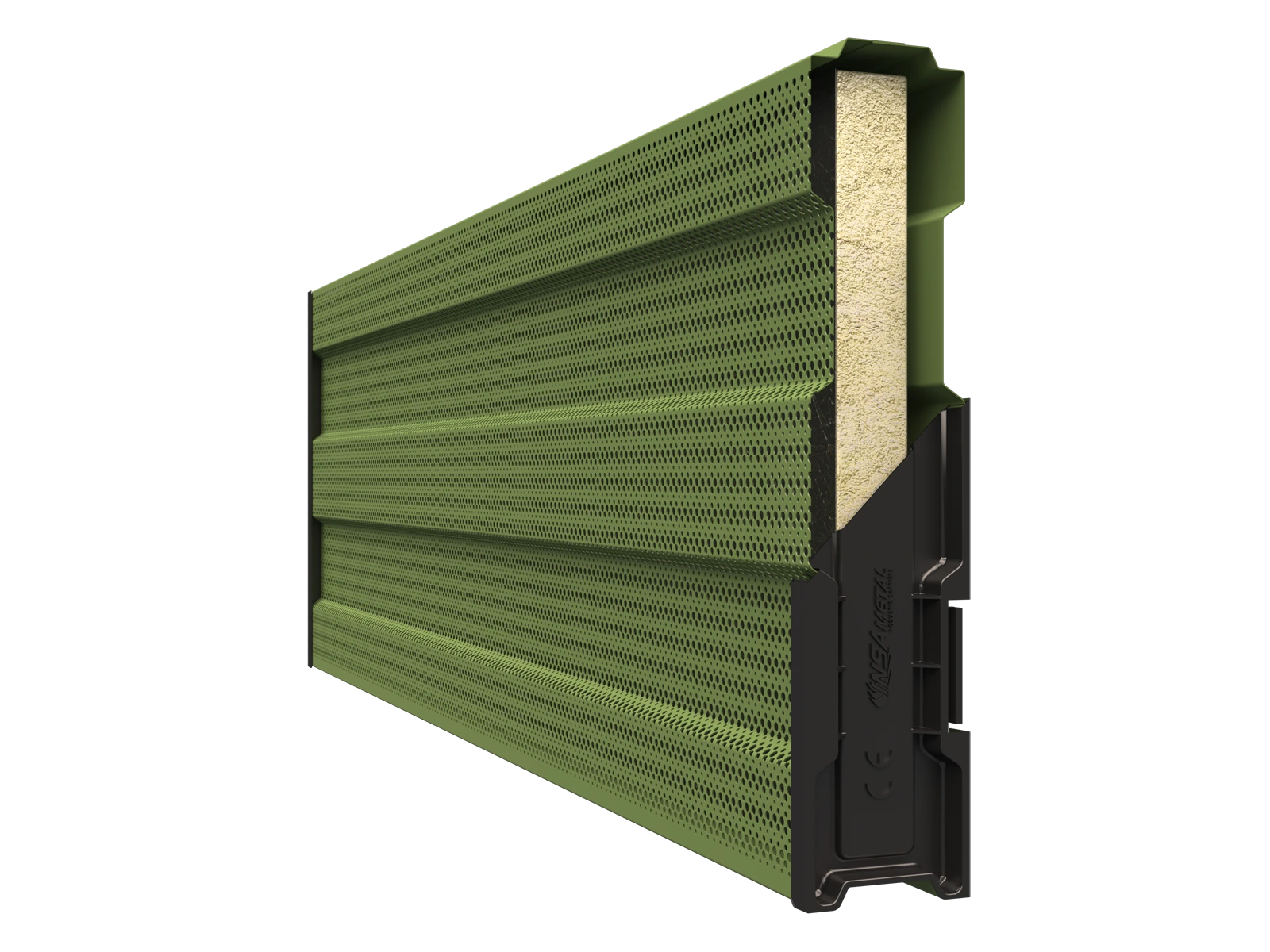

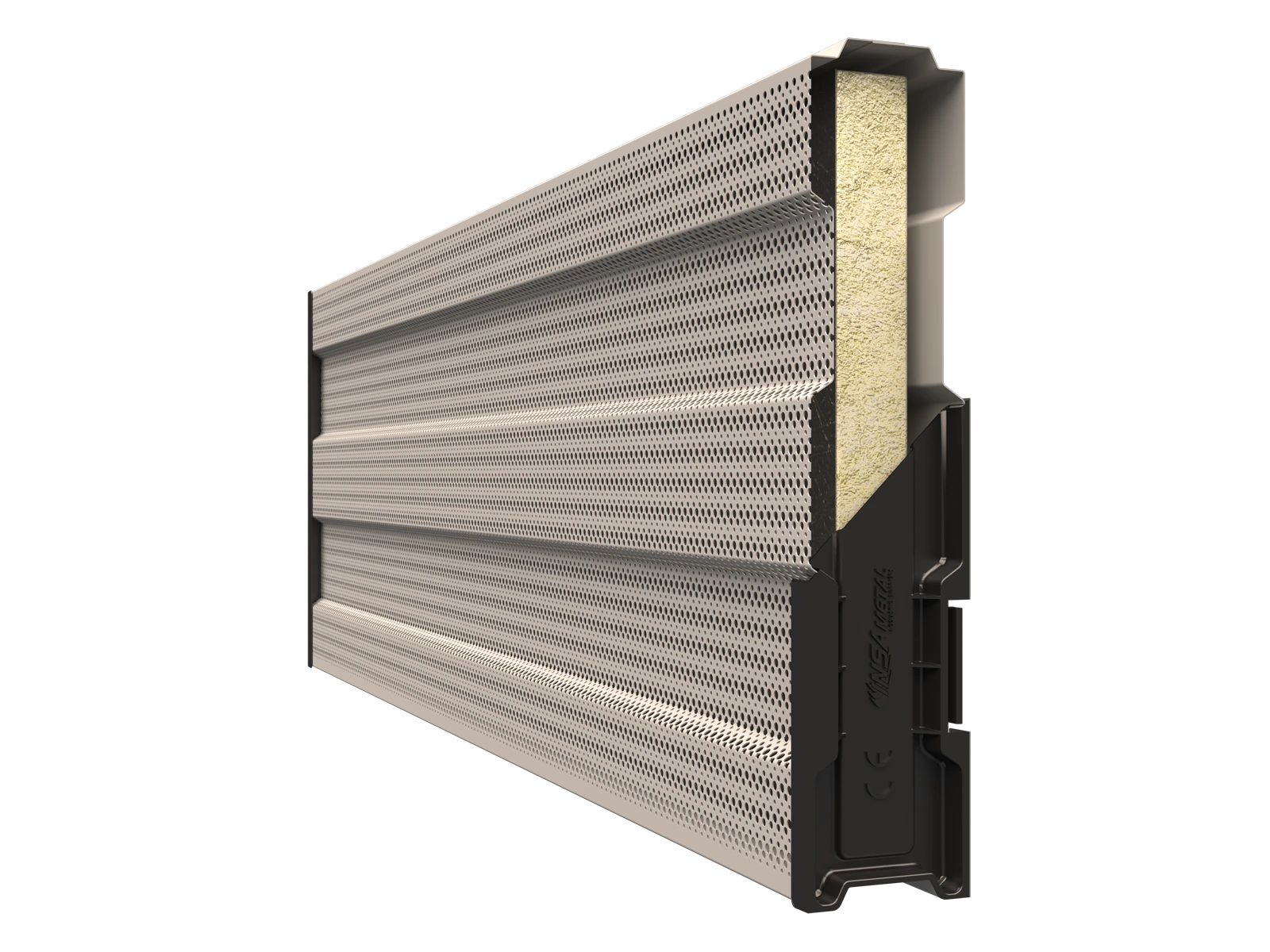
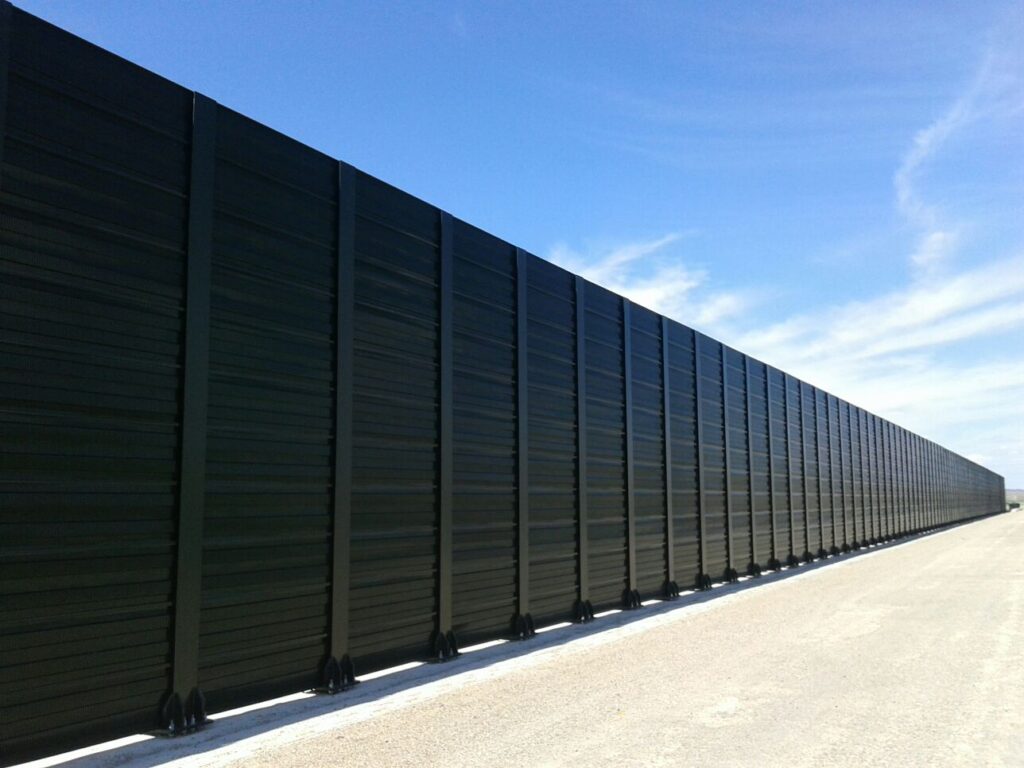
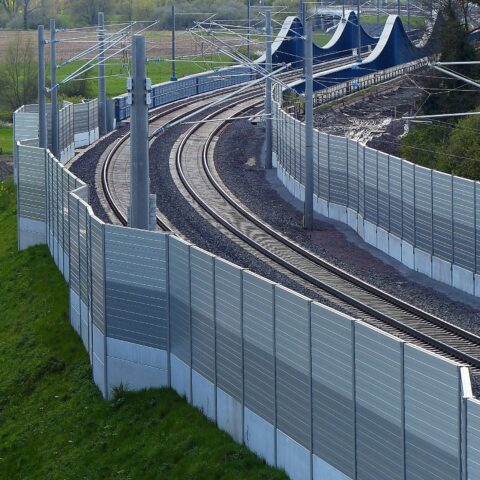
The INSA P68 metal noise barrier is our flagship and best-selling model, known for its ideal balance between mechanical strength, sound absorption, and acoustic insulation. 

It is made of galvanized steel with a rock wool core, providing high performance in both urban and industrial environments 




Installation is usually performed by embedding it into HEAA profiles, ensuring a strong and durable structure. It is also available painted in the RAL color range, with RAL 6009 (fir green) being the most common. The INSA P68 is the most versatile and popular solution in our catalog.

Characteristics

  • Maximum lightness.
  • Variable module lengths.
  • High acoustic absorption.
  • Wide range of colors.

Technical Specifications

Height

0.5 m (1.64 ft)

Pilar Spacing

From 2 m to 5 m (6.56 ft to 16.40 ft)

Thickness

110 mm (4.33")

Weight

15 kg/m (10.07 lb/ft)

Material

Steel

Main Element

Perforated

Auxiliary Element

Opaque

Filler

Mineral wool

Fixing Element

Anchor plate

Sound Absorption (DLa)

A4

Airborne Sound Insulation (DLr)

B3

Global Isolation Rw (C, Ctr)

32 (-2;-6)

Foundation

FOOTINGS

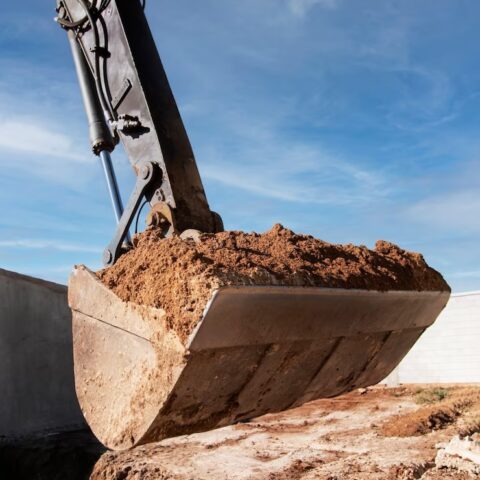
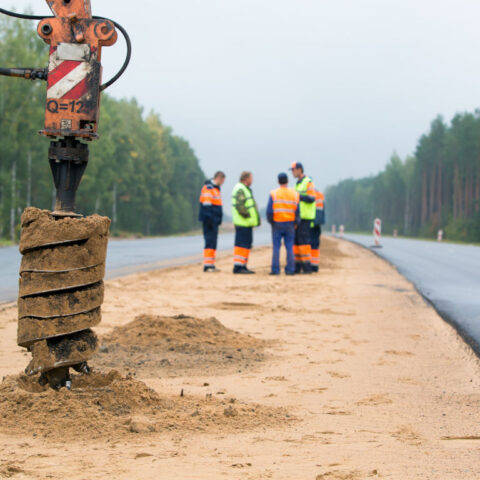
These are shallow foundations used when the soil has adequate bearing capacity.

They consist of reinforced concrete blocks that directly transfer the loads of the noise barrier to the ground.

Footings are mainly used in projects with medium heights and moderate structural demands.

They can be isolated or continuous, and their geometry is defined according to the transmitted loads and soil type. This is an economical, fast-execution solution, ideal for stable and accessible ground conditions

PILES

These are deep foundations used when the surface soil is not suitable to safely support structural loads.

They are driven or cast until reaching resistant strata, transferring loads through lateral friction and/or end bearing. Piles are suitable for tall noise barriers or those located in areas with wind, vibration, or soft soils.

They can be prefabricated or constructed on site, with depths varying according to the geotechnical study. They offer high load-bearing capacity and precise settlement control.

Galvanized finish

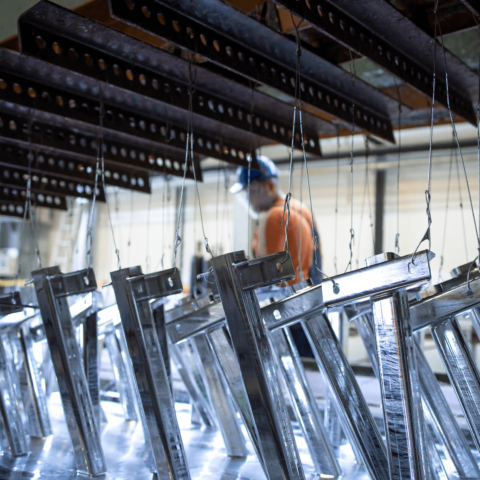
GALVANIZED

UNE-EN ISO 1461

This treatment consists of coating steel parts with a layer of molten zinc.

The purpose is to protect steel against corrosion, especially in aggressive or humid outdoor environments.

The UNE-EN ISO 1461 standard regulates the coating’s thickness, adhesion, and appearance requirements, ensuring durable and high-quality protection.

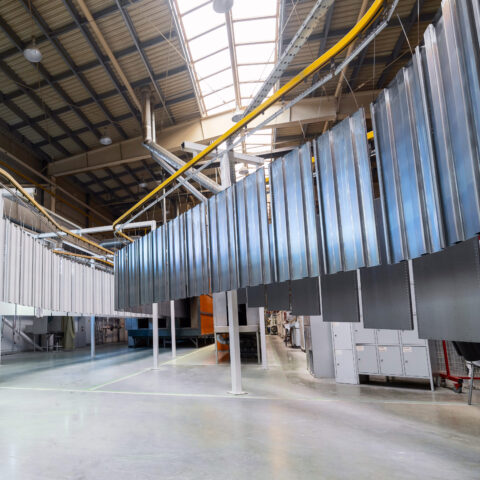
POWDER COATING

EN 15773

Powder coating is a process in which powder paint is applied to metal, adhering through electrostatic charge and cured in an oven at high temperature.

It is used for both aesthetic and protective purposes, as it enhances resistance to weathering, UV radiation, and impacts.

The EN 15773 standard specifies the requirements to ensure a uniform, durable, and high-quality finish, fully compatible with galvanized parts.

Thermo-lacquered

DUPLEX SYSTEM

PROTECTION AND COLOR

The combination of galvanization + powder coating is known as the Duplex System.

This system significantly extends the durability of steel by combining the anti-corrosive protection of zinc with the strength and aesthetics of powder coating.

It is the ideal solution for demanding environments and for projects requiring excellent appearance and long-term durability.

Desliza
Select the fields to be shown. Others will be hidden. Drag and drop to rearrange the order.
  • Image
  • Height
  • Module length
  • Thickness
  • Weight
  • Material
  • Main element
  • Auxiliary element
  • Filler
  • Fixing element
  • Absorption category (Dla)
  • Insulation category (Dlr)
  • Global isolation Rw (C,Ctr)
  • Width (mm)
  • Length (mm)
  • Total Height
  • Module Length
  • Module Width (mm)
Click outside to hide the comparison bar
Compare
Scroll al inicio